
Retail business owners invest significant capital into window displays, shelf talkers, and hanging banners. Yet many notice that shoppers still bypass major promotional islands. Consumers face massive sensory overload the moment they enter a commercial space. Walls, digital screens, and crowded shelving units fight for limited cognitive attention. This saturation causes a psychological phenomenon known as banner blindness, where shoppers subconsciously tune out standard marketing messages.
To fix this, smart businesses look downward. The floor represents one of the most underutilized assets in retail marketing. People naturally cast their eyes downward while walking to maintain balance, look for obstacles, or check mobile devices. By placing high-impact visual cues directly into this natural line of sight, you capture immediate peripheral attention without interrupting the physical shopping experience.
Overcoming the Retail Friction Points
Every commercial layout has systemic flaws that hurt the bottom line. Physical friction points actively prevent browsers from converting into buyers. Custom floor graphics provide a direct remedy for three specific architectural headaches.
Eliminating Cold Spots and Dead Zones
Almost every retail space suffers from dead zones. These are back corners, secondary aisles, or hidden alcoves that receive minimal foot traffic. When inventory sits in a dead zone, turn rates drop and carrying costs rise.
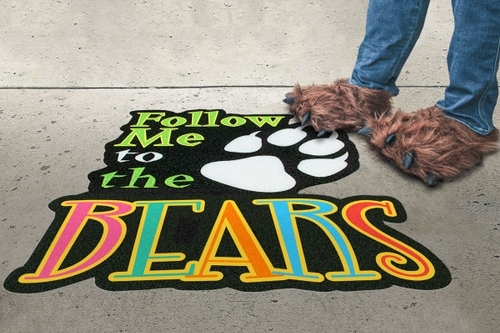
You can use strategic floor decals to extend the main walkway. A series of footprints, geometric lines, or contrasting color blocks draws the eye and pulls the body forward. This visual pull coaxes shoppers into underutilized store sectors. Turning a cold spot into a high-traffic zone increases product exposure and clears stagnant stock.
Resolving Customer Confusion and Restoring Flow
A confused shopper rarely buys anything. When a retail layout lacks clear organization, visitors feel anxious and leave sooner. Poor spatial layout causes bottlenecks near the entrance, while the rest of the facility remains empty.
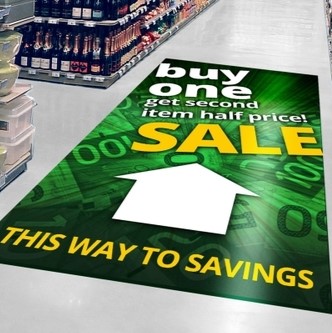
Clear pathfinding solves this problem instantly. Floor-based arrows, department labels, and zone boundaries tell visitors exactly where to go. This guidance streamlines the shopping trip. It makes the entire trip feel effortless from the entrance to the checkout line.
Breaking Through the Cluttered Eye-Level Problem
Hanging signs and shelf strips often create visual noise rather than clarity. When every brand shouts at eye level, nothing stands out. The floor offers an entirely clean canvas.
Because the floor lacks competing advertisements, a single well-placed graphic delivers high contrast. The brain flags the ground-level graphic as an anomaly in a familiar environment. This sudden visual pause disrupts autopilot browsing behavior, making consumers look at featured products they might otherwise ignore.
The Science of Foot Traffic: How to Guide Customer Flow in Store
Designing an effective layout requires an understanding of basic human movement patterns. Retail behavioral studies show that over eighty percent of consumers instinctively turn right upon entering a store. This initial movement zone is highly critical. Retailers can use specific visual cues to capitalize on this natural momentum.
To understand why these visual systems work so well, look at the broad impact of physical environmental cues. Signs play a vital role in organizing our everyday experiences and setting spatial expectations. According to research on commercial signaling outlined by Taylor DeGo, structured signage provides vital context that prevents environmental frustration. On the retail floor, this context translates directly into intuitive movement.
To successfully manage consumer traffic, follow these layout principles:
- Keep the entrance clear: Do not place decals in the initial entry space. Shoppers need a brief moment to adjust to the indoor environment. Place your first graphics at least ten feet inside the front door.
- Use structural shapes: High-contrast arrows, solid borders, and repeating lines create instant pathways. The brain follows these lines automatically without requiring conscious reading.
- Match colors to your goals: Use highly visible colors that contrast against the flooring tile or wood vinyl. Use bright tones for temporary clearance events and muted brand colors for permanent wayfinding.
Selecting the Right Decals for Commercial Success
Not all vinyl stickers can handle commercial store environments. Applying cheap materials creates major safety hazards and can ruin permanent flooring. Retail floor decals must stand up to heavy daily foot traffic, rolling shopping carts, commercial cleaning machines, and harsh Canadian winter conditions like salt and slush.
High-quality graphics rely on specialized construction:
| Component | Technical Material Standard | Operational Benefit |
| Adhesive Base | High-tack, pressure-sensitive removable acrylic | Holds edges tight against tile, concrete, or laminate, but pulls up clean without leaving sticky residue. |
| Print Media | Dimensionally stable calendered or cast vinyl | Prevents shrinking, tearing, or stretching under heavy foot traffic. |
| Top Laminate | UL-certified slip-resistant textured over-laminate | Provides necessary friction to prevent slips and falls, meeting local commercial liability insurance requirements. |
Using the right materials ensures your floor graphics look professional and remain safe throughout their entire deployment.
Implementing Your Floor Graphic Strategy
Ready to transform your retail footprint? A successful installation combines clear business objectives with professional-grade production tools.
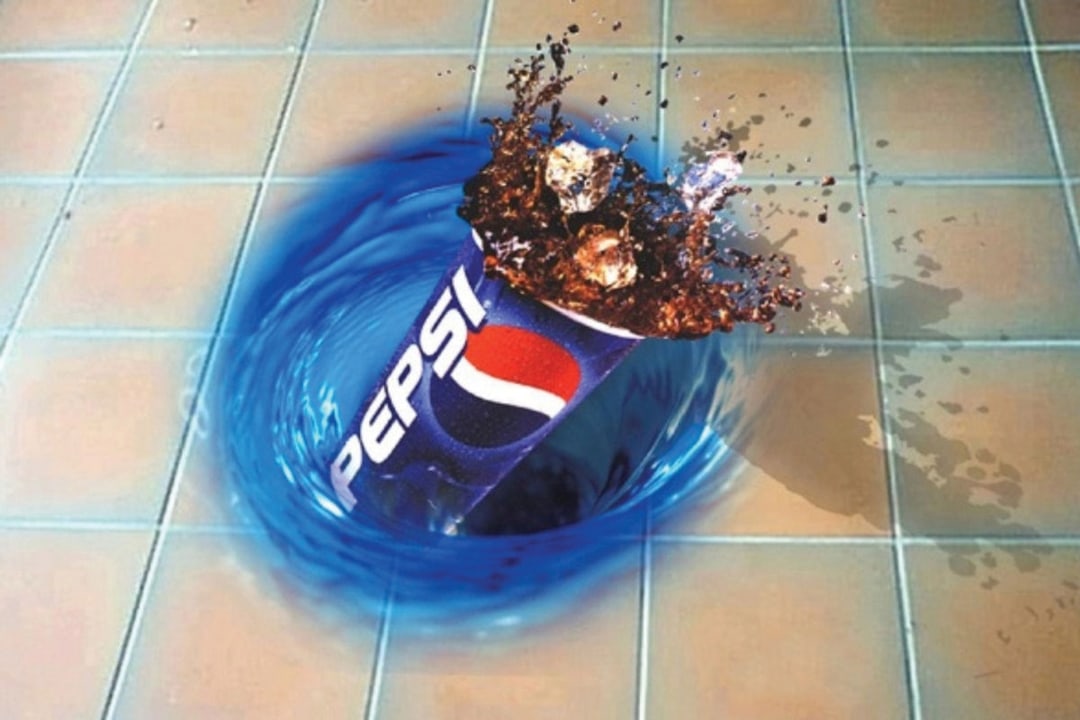
For temporary promotions, use bold product imagery and short call-to-action copy. Keep text minimal, as moving shoppers scan rather than read. For permanent wayfinding, integrate your company logos and primary fonts to maintain a professional look.
Explore our indoor signage solutions to see how floor elements connect with wall murals and dimensional signs to build a unified space. When you are ready to start planning your layout, check out our dedicated indoor and outdoor floor decals service page to view material options, technical specs, and request a custom production quote for your retail store.
FAQs
Can custom floor graphics be used on commercial carpets?
Yes, but they require a specific high-tack adhesive designed for fabric fibers. Standard smooth-floor vinyl will lift on carpet, creating a tripping hazard. Always specify your exact flooring material before printing.
How long do commercial floor decals last in high-traffic retail stores?
Industrial retail floor decals last between six to twelve months under heavy foot traffic. Regular cleaning and proper installation away from high-impact structural friction points will maximize their lifespan.
Will removing floor graphics damage polished concrete or hardwood flooring?
Professional graphics use specialized removable adhesives. They release cleanly when pulled up at a ninety-degree angle, leaving no sticky residue or damage on properly sealed hardwood, tile, or laminate floors.
Are retail floor stickers slick when wet from rain or snow?
Commercial-grade floor decals feature a deeply textured slip-resistant laminate surface. This texture maintains friction and slip resistance even when shoppers track in water, ice, or snow.