Your storefront is the first handshake you have with a potential customer. In a world where digital ads are skipped and ignored, physical signage remains a permanent fixture of your local presence. But for many business owners in Canada, choosing the right medium is a stressful hurdle. You might be feeling the weight of “invisible business” syndrome, where your shop blends into the brickwork of the street. Or perhaps you are staring at a budget and wondering if the extra cost of dimensional letters actually translates to more foot traffic.
Solving the “Invisible Business” Syndrome
The term “invisible business” refers to a storefront that lacks a focal point. When pedestrians or drivers pass by, their brains naturally filter out flat, low-contrast information. This is an evolutionary trait; we are wired to notice depth, movement, and light. If your sign is a flat piece of vinyl against a flat wall, you are effectively asking the human brain to do extra work to find you. Most people simply won’t.
Professional outdoor signage and graphics act as an interruption to the visual flow of a street. By moving from a 2D plane to a 3D presence, you create a landmark rather than a label. In 2026, the competition for physical attention is higher than ever. As online shopping continues to dominate, your physical store must look like an authority. A sign that looks “stuck on” suggests a temporary business. A sign that is “built in” suggests a community pillar.

Why Your Storefront is Your Most Important Salesperson
Think of your signage as a salesperson who never sleeps, never takes a lunch break, and never asks for a commission. It works 24 hours a day to tell people who you are and what you stand for. If your salesperson is dressed in a faded, flat t-shirt, they might not close many deals. If they are wearing a sharp, tailored suit with clear definition, people listen. 3D storefront lettering vs. flat signage isn’t just a design choice; it is a branding strategy that dictates your perceived value before a customer even sees your prices.
The Case for 3D Storefront Lettering
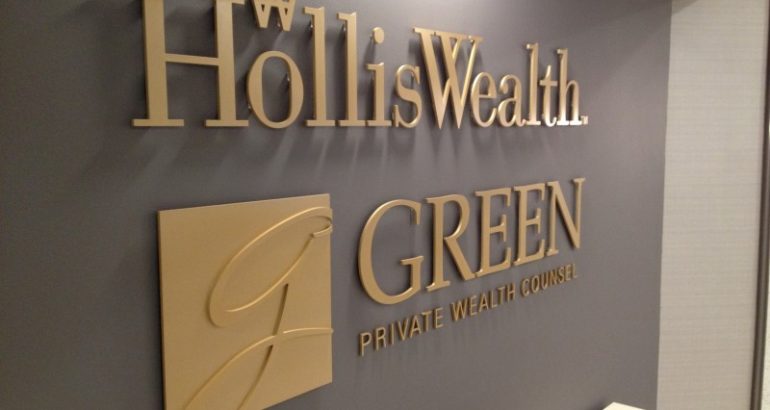
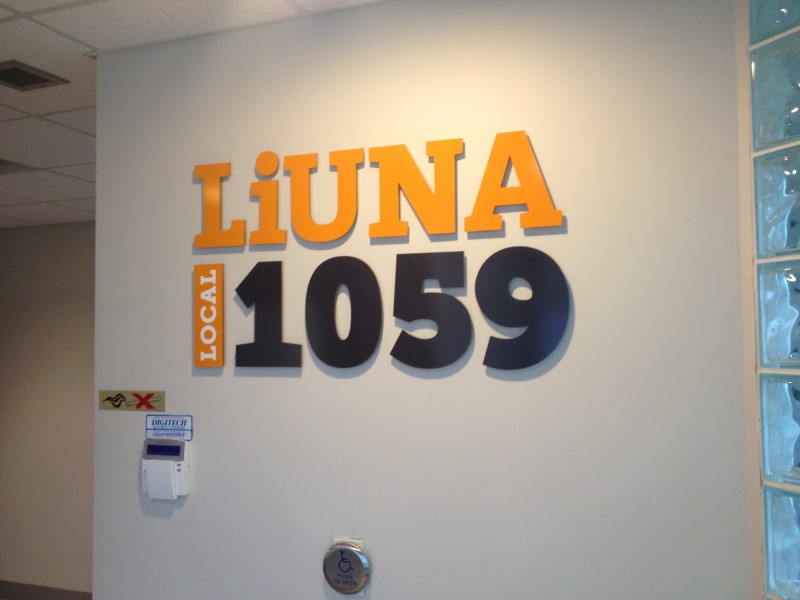
Dimensional signage, often referred to as channel letters or 3D letters, has become the gold standard for Canadian retail. These signs are fabricated from materials like aluminum, acrylic, or stainless steel. Because they physically stand off the wall, they interact with the sun. As the sun moves across the sky in London or Toronto, the shadows cast by your sign change. This subtle movement makes the sign feel alive and dynamic.
Dimensionality and Human Perception Shadows provide a sense of quality. When we see a sign with depth, our brain registers it as high-value. This is why luxury brands, law firms, and medical clinics almost exclusively use 3D lettering. It conveys a sense of permanence. If you want to charge premium prices, your storefront must look premium. Acrylic letters offer a sleek, modern finish, while metal provides a rugged, industrial feel that suggests your business is here to stay.
Beating Nighttime Invisibility with Illumination In Canada, we spend a significant portion of the year in the dark. If your business is open past 4:30 PM in December, a flat sign without external spotlights is practically invisible. 3D letters solve this through internal LED illumination. You can choose front-lit letters for a bold, bright look, or “halo-lit” (reverse channel) letters. Halo lighting creates a glow behind the letter, outlining it in a soft light that looks sophisticated and expensive. This is the ultimate cure for nighttime invisibility, ensuring your brand stays top-of-mind even when the sun goes down.
When Flat Signage Still Makes Sense
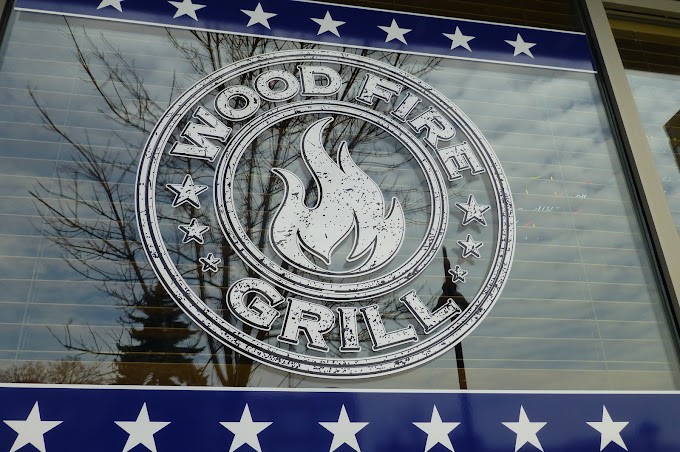
We understand that budget anxiety is a real factor for new entrepreneurs. Flat signs, typically made from Alupanel (a plastic core sandwiched between aluminum sheets) or high-density foam, have their place. They allow for much higher levels of detail. If your logo has complex gradients, small fine print, or detailed illustrations, a flat printed sign is often the only way to replicate those elements accurately.
Modern Retail Storefront Ideas for Tight Budgets If you are looking for modern retail storefront ideas but can’t commit to a full 3D LED setup, you can use a hybrid approach. A high-quality flat sign with a “gooseneck” light fixture above it can create a vintage, boutique look that is very popular in 2026. This setup provides visibility and style without the higher price point of individual channel letters. Additionally, flat signs are much faster to produce and install. If you are a pop-up shop or have a short-term lease, a flat sign is a practical, logical choice.
3D vs. Flat: The ROI Breakdown
When assessing the cost, look at the lifespan of the material. A flat vinyl sign on a board will eventually succumb to UV rays and temperature swings. After five years, you might see peeling at the edges or fading in the pigments. 3D letters made of powder-coated aluminum can easily last fifteen years or more with minimal maintenance. When you divide the cost of the sign by the number of years it serves you, the “expensive” 3D option often ends up being the cheaper long-term investment.
Running a small business requires managing these types of trade-offs daily. For more insights on managing the hurdles of entrepreneurship, checking out resources like Millo’s small business blogs can help you stay ahead of the curve.
Durability in the Canadian Climate
Ontario weather is a nightmare for cheap signage. Between the humid summers and the -30°C winters, materials expand and contract constantly. Flat signs can sometimes warp if not installed with the right spacers. 3D letters, particularly those made from metal, are incredibly resilient. They don’t rust, they don’t fade easily, and they can withstand the heavy wind loads we see in Southwestern Ontario. When you choose 3D storefront lettering vs. flat signage, you are also choosing a product built for our specific climate.
Designing for Success: Beyond the Font
The battle between 3D and flat is only one part of the equation. Contrast is the second. A white 3D letter on a light grey wall is still hard to read. You need a high-contrast color palette to ensure legibility from a distance. For 2026, we are seeing a trend toward high-contrast minimalism: black letters on white stone, or white letters on dark wood. This look is timeless and ensures that your sign is readable even for people with visual impairments or those driving quickly past your location.
Professional installation is also non-negotiable. A 3D sign that is slightly crooked or has visible wires looks worse than no sign at all. It screams “amateur.” At Artcal, we focus on the technical details—the mounting templates, the power supplies, and the masonry anchors—so your sign looks like a seamless part of the architecture.
Final Verdict: Which Signage Wins in 2026?
If your goal is to grow your brand, increase foot traffic, and solve the problem of being overlooked, 3D storefront lettering is the winner. It provides the depth, lighting options, and durability that modern businesses need to thrive. However, if you are a startup focusing on informational clarity or have a very complex graphic identity, a high-quality flat sign can still be an effective tool when paired with the right lighting.
Don’t let your business stay invisible for another season. Whether you are ready for a full 3D overhaul or want to discuss budget-friendly flat options, the team at Artcal is here to help you make an impact. Contact us today to start your storefront transformation.
FAQs
- Is 3D lettering much more expensive than flat signage? While the upfront cost is higher due to material and labor, 3D lettering often lasts twice as long as flat signage. It also provides better marketing value by being visible at night and from greater distances, leading to a better return on investment over time.
- Can I install 3D letters myself to save money? We do not recommend DIY installation for 3D signage. These signs often require electrical wiring for LEDs and specific mounting hardware to ensure they don’t fall during a storm. Professional installation protects your investment and ensures your warranty stays valid.
- What is the best material for a storefront sign in Ontario? Aluminum is generally the best choice for the Canadian climate. It is lightweight, does not rust, and can be powder-coated in any color to resist fading from UV exposure.
- How do I fix a sign that is invisible at night? If you have a flat sign, you can add external floodlights or gooseneck lamps. If you are upgrading, choosing internally lit 3D letters is the most effective way to ensure your business is seen 24/7.
- How long does it take to get a custom 3D sign? Typically, the process takes 3 to 6 weeks from design approval to installation. This includes the time for fabrication, painting, and securing any necessary local permits.