Think about the last digital banner ad you saw. Can you remember the brand? Can you remember the offer? For most Canadians, the answer is a resounding no. We have entered an era of total digital saturation. Our brains have become expert at filtering out the noise of sidebars, pop-ups, and sponsored posts. This shift has forced businesses to rethink their spending. When we look at branded merchandise vs. digital ads, we aren’t just looking at two different line items in a budget. We are looking at the difference between a fleeting whisper and a permanent handshake.
The Digital Dead End: Why Ads are Losing Their Edge
Digital advertising was once the holy grail of marketing because of its precision. However, in 2026, the playing field has changed. Privacy regulations and the rise of sophisticated ad-blocking technology have made it harder to reach the right people. Even when an ad does reach its target, it often falls victim to “banner blindness.” This is the psychological phenomenon where users unconsciously ignore anything that looks like an advertisement.
Combatting Ad Fatigue and Skimming in 2026 The modern consumer skims content at lightning speed. They are looking for information or entertainment, not a sales pitch. This creates “Ad Fatigue.” When a user feels hunted by a brand across multiple platforms, it creates resentment rather than interest. Digital ads are often intrusive, interrupting the user experience.
In contrast, branded merch is a gift. It is an opt-in experience. When someone accepts a high-quality hoodie or a durable water bottle, they are inviting your brand into their daily life. They aren’t skimming past you; they are wearing you, carrying you, and using you. This physical presence bypasses the mental filters that render digital ads invisible.
The Tangible Advantage: Physical Branding Psychology
There is a deep neurological difference between seeing a pixelated logo and holding a physical object. Physicality triggers different sensory pathways. When we touch an object, our brain forms a stronger memory of the encounter. This is why many successful founders focus on the physical experience of their brand. For instance, looking at Shantell Martin’s story on Bench shows how physical art and tangible expressions create a deeper connection than a mere digital footprint.
The Endowment Effect and Brand Recall The “Endowment Effect” is a psychological principle that states people value an object more highly once they own it. When you give a customer a piece of high-quality merchandise, it becomes “their” item. This sense of ownership transfers to the brand itself.
A digital ad has a lifespan of seconds. A well-made ceramic mug has a lifespan of decades. Every time that customer reaches for their morning coffee, they see your logo. It isn’t a forced impression; it is a subconscious reinforcement of your brand’s presence. Over time, this builds a level of trust and familiarity that a 15-second pre-roll video simply cannot match.
Calculating the Real ROI: Vanishing Ads vs. Lasting Assets
One of the biggest pain points for business owners is the “vanishing” investment of digital marketing. You pay for clicks. You pay for views. The moment your daily budget is exhausted, your brand disappears from the internet. You are essentially renting attention.
Cost-Per-Impression: The Math Behind the Merchandise Let’s look at the math of branded merchandise vs. digital ads. A mid-range digital campaign in London, Ontario, might cost you $5.00 for every thousand impressions (CPM). These impressions are often split-second glances from people who may not even be in your target demographic.
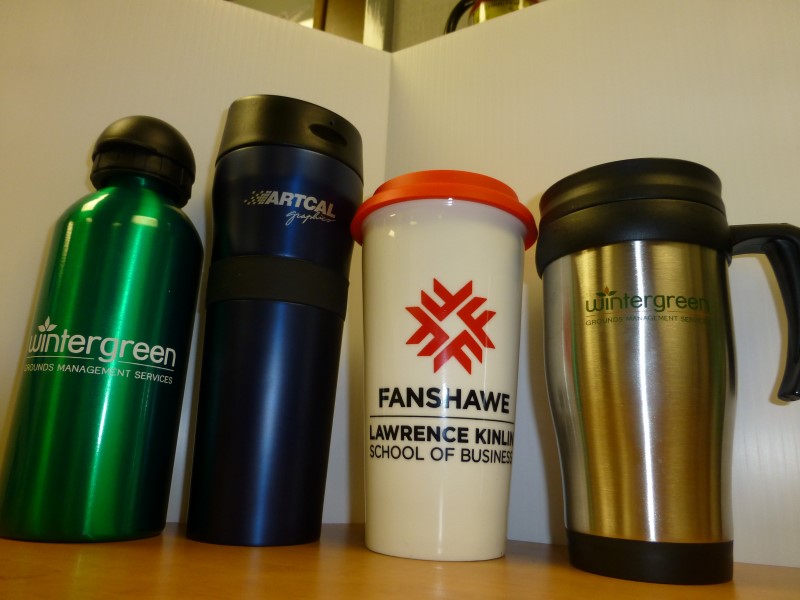
Now, consider a $20 high-quality travel tumbler. If that customer uses that tumbler three times a week for three years, that single item generates over 450 impressions. If they take it to an office, a gym, or a park, the “passerby” impressions could easily reach into the thousands. Unlike the digital ad, you only paid for that item once. The cost-per-impression continues to drop every single day the item stays in use. It is a one-time investment that generates a compounding return.
High-Quality Swag vs. Throwaway Promos: Protecting Your Reputation
Many businesses have been burned by the “Cheap Swag” backfire. They ordered 5,000 plastic pens that leaked or t-shirts that shrunk after one wash. This is a dangerous mistake. Your merchandise is a physical representation of your service quality. If you give someone a piece of junk, they will assume your business provides junk service.
Why the “Cheap Swag” Backfire Costs More Than You Think In 2026, consumers are more environmentally conscious than ever. Giving away “trash” is not just bad marketing; it is a PR risk. People don’t want more clutter. They want utility. The goal should always be high-quality swag vs. throwaway promos.
One premium, weather-resistant jacket with a subtle, tasteful logo is worth more than a hundred cheap plastic keychains. High-quality items are kept. They are talked about. They are used in public. A premium item suggests that your brand values excellence and cares about the recipient. It moves the conversation from “here is a flyer” to “here is something useful for your life.”
Integrating Swag into a Modern Canadian Marketing Mix
We aren’t suggesting that digital ads should be abandoned entirely. Instead, the most successful Canadian brands are using a hybrid approach. This is often called “Phygital” marketing. You use digital ads to find the leads and physical merchandise to close the deal and ensure retention.
Sustainability and Practicality in the Ontario Market For businesses in Ontario, practicality is key. We live in a climate that demands durability. When choosing merchandise, think about the local lifestyle. Branded ice scrapers, high-quality knit toques, or heavy-duty umbrellas are items that people in Southwestern Ontario will keep for years because they are necessary for survival.
When you provide a solution to a local problem, your brand becomes a hero. This is the “Science of Swag” at its most basic level: be useful, be durable, and be present when it matters most.
How to Choose Merchandise That Actually Works
To avoid the pitfalls of wasted spend, follow these three rules for selecting your physical branding assets:
- The Utility Test: If the recipient wouldn’t buy this item for themselves, don’t give it to them. It must serve a daily purpose.
- The Durability Test: Could this item survive a Canadian winter? If it’s going to break in a month, it’s a waste of your money.
- The Aesthetic Test: Is the branding subtle and professional? In 2026, giant, gaudy logos are out. Minimalist, high-end branding makes people actually want to wear or use the item in public.
By focusing on these three pillars, you ensure that your investment doesn’t end up in a landfill. You ensure that your brand stays in the hands—and the minds—of your best customers.
Conclusion: Making Your Brand Unignorable
The battle of branded merchandise vs. digital ads isn’t about which one is “better” in a vacuum. It’s about which one builds a lasting legacy. Digital ads are great for a quick spike in traffic, but they are fleeting. They are easily ignored and quickly forgotten.
Branded merchandise is a tangible stake in the ground. It is an investment in a long-term relationship. It solves the problem of ad fatigue by providing value instead of an interruption. It solves the problem of vanishing investments by creating a physical asset that works for you for years.
If you are tired of watching your marketing budget disappear into the digital void, it’s time to get physical. Let’s create something your customers will actually want to keep. Contact us today to discuss how we can turn your brand into a lasting household name.
FAQs
- Is branded merchandise really cheaper than digital ads? In the long run, yes. While a physical item has a higher upfront cost per unit, its lifespan is significantly longer. A digital ad stops working the second you stop paying. A physical item provides “free” impressions for years after the initial purchase.
- How do I know if my swag is “high quality”? A good rule of thumb is to look at the materials. Is the fabric heavy? Is the plastic BPA-free? Does the mechanical part feel sturdy? We always recommend ordering samples first. If you wouldn’t be proud to give it to your best friend, don’t give it to a client.
- What are the most popular branded items in 2026? Sustainability is the biggest trend. Reusable tech accessories, high-end drinkware, and apparel made from recycled materials are the top performers. Items that promote wellness or outdoor activity are also highly valued in the Canadian market.
- Can I track the ROI of branded merchandise? Yes, though it is different from digital tracking. You can use custom QR codes on the items, unique landing pages, or “mention this item” promos. However, the true ROI is found in increased customer lifetime value and brand referral rates.
5. Does Artcal handle the design or just the printing? We do both. Our team can help you select the right products and ensure your logo is optimized for the specific material, whether it’s embroidery, screen printing, or laser engraving.